Architecting Digital Presence: Custom Next.js Platform for Juxta Architects
A modern web platform for an architecture studio, designed to highlight large-scale imagery and precise design through a fully custom Next.js and Sanity CMS build.
Overview
This project executed a full digital transformation for a leading local architecture firm, migrating them from an outdated, non-responsive WordPress system to a custom Next.js/Sanity platform built for performance, design fidelity, and long-term autonomy.
The Challenge
The firm’s digital presence was fundamentally misaligned with their modern, heritage brand. Their legacy WordPress site was cumbersome, slow, visually outdated, and required lot's of effort for simple content updates, discouraging them from showcasing their latest, highest-impact projects.
The mandate was to build a cohesive, modern platform that emphasized the brand's aesthetic while putting content control and performance back into the client's hands.
The Solution
Blueprint: Engineering for Autonomy and Brand
The technical solution was rooted in creating a scalable, high-performance architecture optimized for large media assets.
From Legacy to Next-Gen Architecture
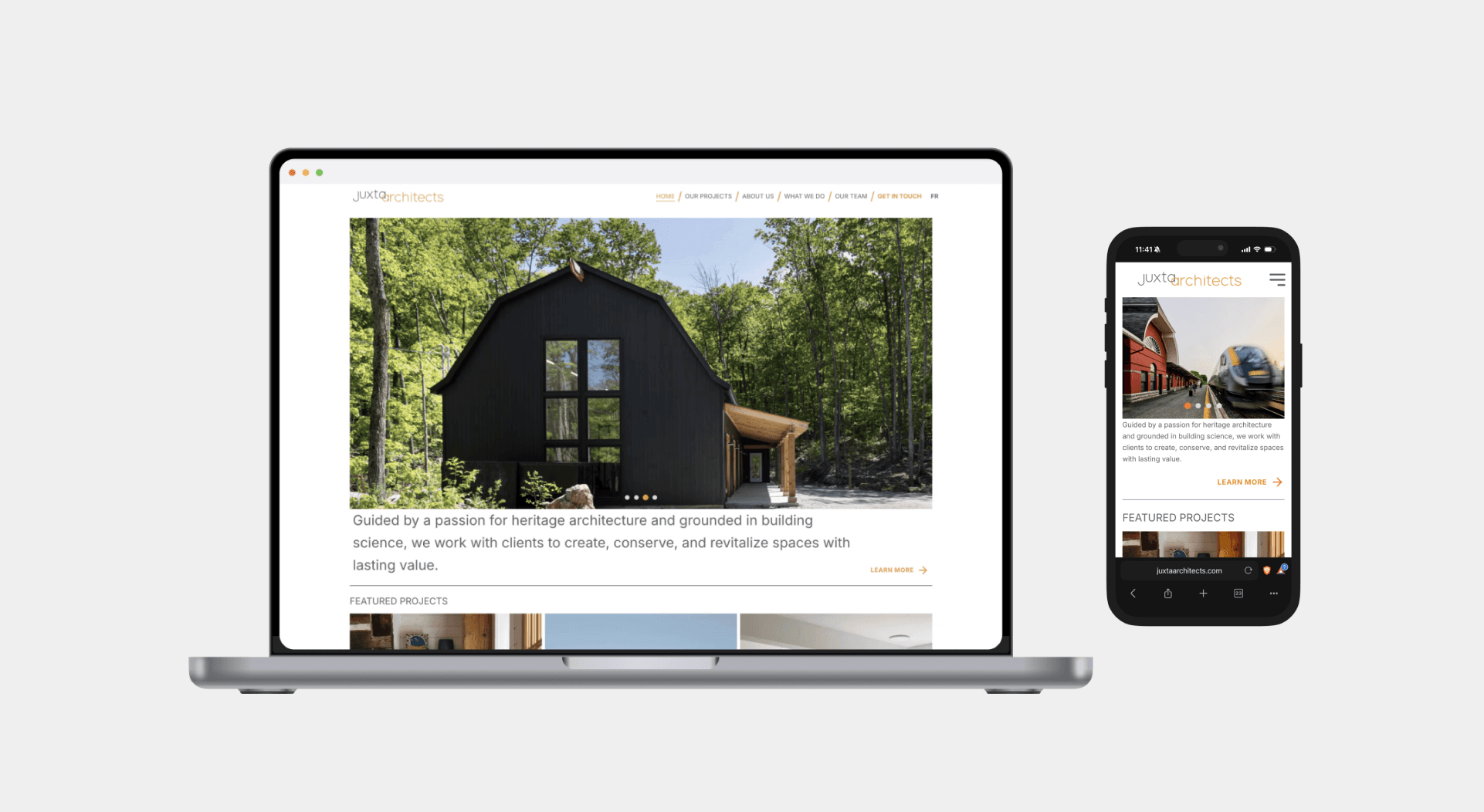
- Next.js & Performance: Transitioned the entire site to Next.js, leveraging Static Site Generation (SSG) to ensure pages loaded lightning-fast, immediately solving the speed issues of the old platform.
- Design Fidelity: While strictly adhering to the firm’s design vision and brand colors, I took strategic liberties with the mobile design to ensure uncompromised responsiveness and an intuitive user experience across all devices.
- Localization: The platform was engineered to cleanly manage bilingual content and locales (Ontario/Quebec), ensuring professional consistency and accessibility for their entire regional client base.
The Custom CMS Architecture (Autonomy)
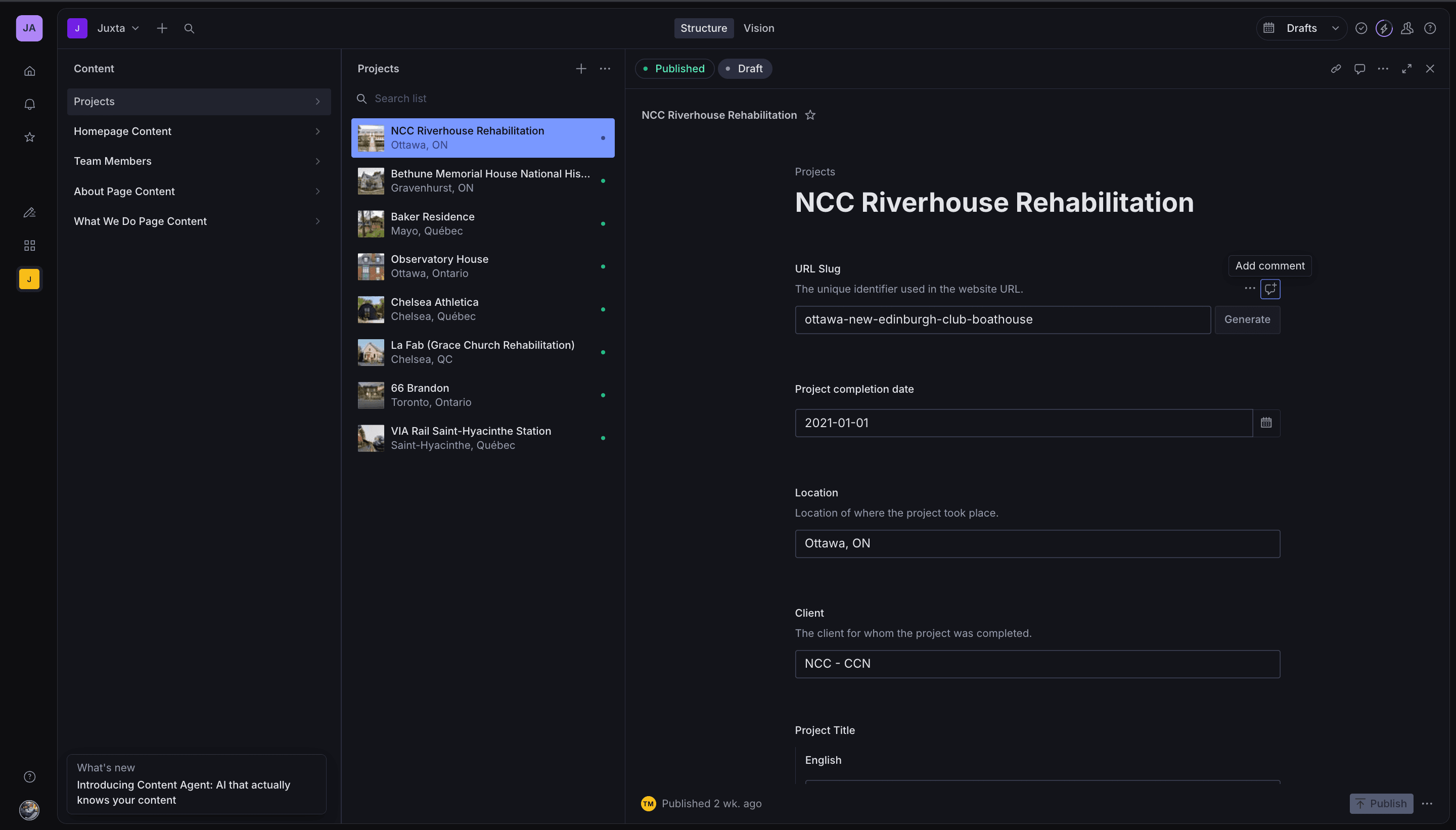
I chose Sanity CMS to solve the client's content management issues by building a custom, non-technical interface:
- Self-Service Content: I architected a flexible schema that allows the client to easily add new projects, update team members, and upload awards instantly without any developer support.
- Scalability: All pages and content are controlled via the Sanity backend, meaning the website is structured to scale seamlessly as their business expands, future-proofing their content strategy.
- Photo Optimization: Utilized modern image pipelines and caching strategies to ensure high-resolution project photography is served efficiently, maintaining visual quality without sacrificing speed.
Results
Legacy: Strategic SEO and Client Control
The project’s true success is measured by the long-term strategic and financial advantages it delivered, transforming the website from a liability into a core business asset.
Strategic Impact and Financial Wins
- Financial ROI: By moving away from costly WordPress hosting, plugins, and maintenance contracts, the new system saves the firm hundreds of dollars annually, validating the long-term efficiency of custom solutions.
- Engineered for Visibility: The entire migration was executed with SEO as a core feature. I ensured proper redirect chains from the old site, implemented dynamic sitemaps, and utilized Next.js's native capabilities to make their high-quality, specialized work fully discoverable by potential clients.
- Empowered Control: The firm now owns a flexible, modern platform that scales with their business and empowers their team to manage their digital brand in real-time. The website is no longer a static brochure but a dynamic, high-performing extension of their architectural practice.